Ruckstuhl Kokosfliese TAHITI in 20124 – verlegt in einem Innenraum mit Ficus
Ruckstuhl Kokosfliesen TAHITI als Bodenbelag in einem Innenraum
Ruckstuhl Kokosfliese TAHITI in 20124 – verlegt in einem Innenraum mit Ficus
Detail der verlegten Ruckstuhl Kokosfliesen TAHITI
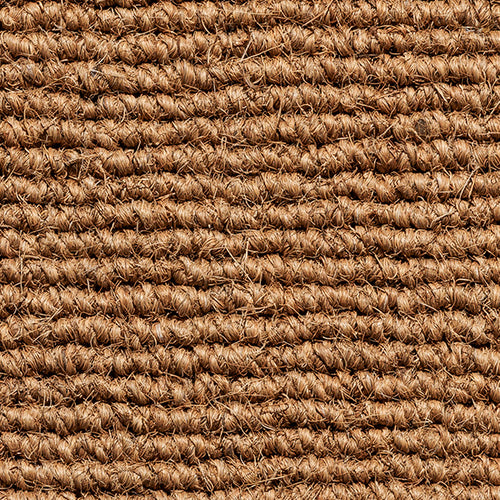
Ruckstuhl Kokosfliese TAHITI in 20124 Natur – Detail der Kokosstruktur
Ruckstuhl Kokosfliese TAHITI in 20124 Natur – in einem brutalistischen Interior mit Designstuhl
Ruckstuhl PORTA Kokos-Schmutzschleuse – Natur
Ruckstuhl Referenzprojekt Basel Stadttheater – Teppich CALICUT in 249 Natur, Freischwinger

Tahiti Tiles

Ruckstuhl In-house Design 1970

TAHITI TILES brings the characteristic texture of coir into architecture. The robust natural yarn creates a precise, lively surface whose subtle irregularities lend the floor depth and rhythm. In its clarity, the design recalls the architecture of the 1960s - honest materials and spaces whose impact comes from proportion and structure.

As carpet tiles, TAHITI can be laid generously across entire areas, creating a calm, architectural overall impression. The installation determines the look: a consistent direction creates a clear sense of order, while alternating directions bring the light and texture more strongly to the fore.

The advantages of the modular system are also evident in use. Individual tiles can be selectively replaced as needed, while the rest of the surface remains intact. This extends the floor covering's lifespan and uses the material where it is actually needed.

The robust coir fiber combines natural beauty with high durability. A floor covering with a strong graphic presence, a long-lasting construction, and a material quality that feels as natural as it is timeless.
Colorits
20124 natur
20124 natur
Configure rug

Tahiti Tiles
Teppichfliesen konfigurieren

Product details
Wear layer
coir
Composition
87% coir, 13% sisal
Back of a rug
heavy backing
Fitted rugs
50x50, 100x100 or on request
Application weight
5600 g/m²
Total weight
7900 g/m²
Overall height
20.0 mm
Surface resistance
- Ω
Through-resistance
- Ω
Fire resistance EN 13501 / DIN 4102
Cfl-s1 / B1
Flame-retardancy requirement
flame-retardant
Can be treated for flame retardancy
With Equipment B FL - S1

something something

origin: Sri Lanka

Coir fibre is obtained from the outer husk of the coconut - the protective covering of the fruit of the coconut palm (Cocos nucifera). Almost every part of the palm is used, from the wood and leaves to the fruit. The fibre itself comes from the tough husk that protects the coconut from salt water, sun and long journeys across the sea. It is precisely this natural protective function that explains the material’s exceptional durability. coir is one of the so-called hard fibres and is among the most durable plant fibres in the world.

The surface looks dry and clearly textured, with a distinctive depth that develops further with use. To this day, much of the fibre extraction process is done by hand. The coconut husks are soaked in water for months to loosen the fibres. They are then dried, sorted, combed and spun into yarn. The entire process, from harvest to finished yarn, can take up to two years. round 13,000 coconuts are needed to produce one tonne of coir yarn.

For decades, rugs such as Calicut have embodied the combination of an archaic natural fibre, technical durability and precise Swiss craftsmanship. coir is antistatic, hard-wearing and dimensionally stable.

At the same time, over time the fibre develops the characteristic patina of the material, giving natural materials a lively appearance. coir shows its exceptional quality particularly in heavily used spaces: hard-wearing, understated and long-lasting.

Advantages:

  • coir helps regulate the indoor climate, as it can absorb up to 420 grams of moisture per square metre, equivalent to 20% of its own weight.
  • coir has a cooling effect in summer and a warming effect in winter. It is suitable for all seasons.
  • coir is sound-insulating.
  • coir is “flame-retardant.”
  • coir is electrostatically neutral.
  • coir is resistant to moisture
  • coir is resistant to pressure.
  • coir has antibacterial properties.

Facts:

  • Coir fibers are obtained from the fibrous husk of the coconut.
  • 13,000 coconuts must be processed to produce one ton of fibers.

Designs take shape where material knowledge meets spatial thinking. They express a design culture shaped not primarily by a single author, but by the collective knowledge of our workshop.

Since 1881, Ruckstuhl has developed rugs at the intersection of architecture, craftsmanship, and technological innovation. Some products arise from functional requirements, others from a deep understanding of natural fibres, construction, or manufacturing processes. They share a precise approach: durable, true to their materials, and free from fleeting trends.

Ruckstuhl In-house Design stands for rugs conceived in the workshop — developed through experience, refined over time, and made for generations.

The cleaning instructions “Cleaning and care of coir rugs” apply to this product.

coir is a durable plant-based natural fibre with a distinctive, coarse texture. At Ruckstuhl, it is made into long-lasting, flat-woven rugs and floor coverings. The robust surface is suitable for intensive use, but preserving its value over the long term re...

To the complete cleaning guide

In use

Selected projects in which this rug was used.


Recently Viewed

something something

Sustainability

Quality materials, thoughtful details, and products made to keep up.