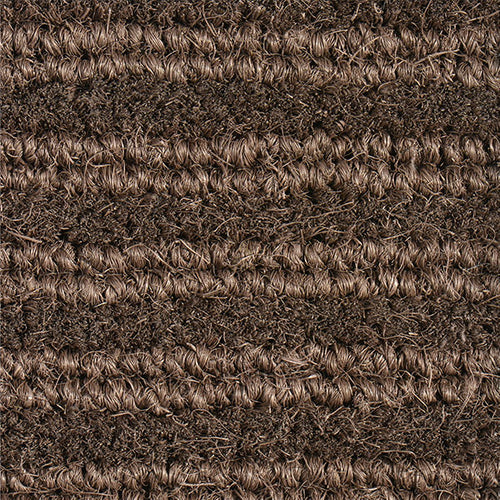
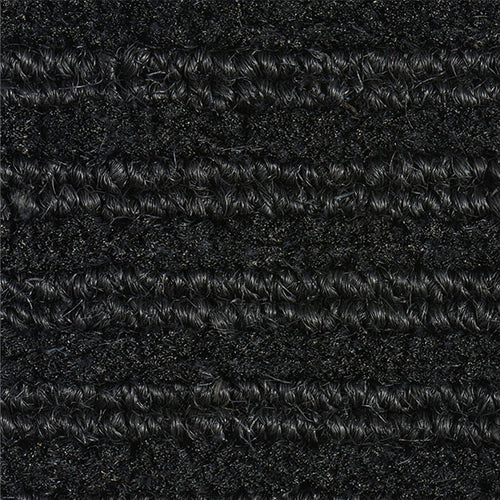
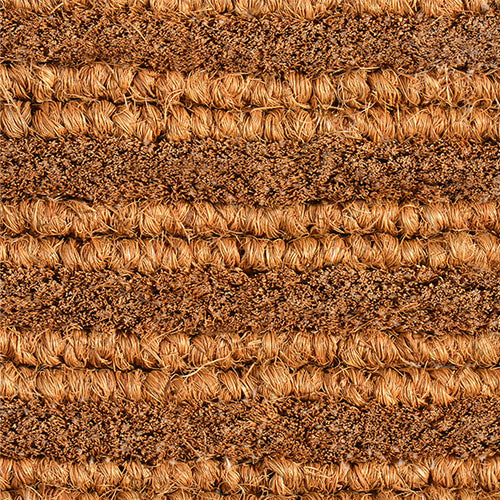
Porta cut-loop


Individuelle Ausführung konfigurieren
Ausführung
Bitte die Masse so eingeben, wie Sie vor dem Teppich stehen: Breite von links nach rechts und Tiefe von vorne nach hinten. Bei einer Fussmatte entspricht die Tiefe dem Weg in den Raum.
Breite × Tiefe
Form und Masse
Breite von links nach rechts, Tiefe von vorne nach hinten. Bei einer Fussmatte entspricht die Tiefe dem Weg in den Raum.
Breite × Tiefe
Teppichfarbe
Einfassung
Schriftzug / Motiv
Zusatzausrüstungen
Bestellung
Zusammenfassung
Ihr konfigurierter Teppich
Schriftzug / Motiv
Hinweis zur Massanfertigung
Ihr Teppich wird individuell nach Ihrer Konfiguration gefertigt. Vor Produktionsbeginn erhalten Sie von uns eine Skizze zur Prüfung und schriftlichen Freigabe. Massanfertigungen sind daher vom Umtausch ausgeschlossen. Davon ausgenommen sind selbstverständlich berechtigte Beanstandungen aufgrund von Material- oder Verarbeitungsfehlern.
Die angegebenen Verkaufspreise verstehen sich als Richtpreise. Für Ihr individuelles Angebot senden Sie die Konfiguration an den gewünschten Ruckstuhl-Fachhandelspartner.
- Entrance area
- Public space
- Corridor
- Ruckstuhl Icon
- Allergies
- Plant Fibers | Vegan
origin: Sri Lanka
Coconut fiber is obtained from the outer husk of the coconut—the protective shell of the fruit of the coconut palm (Cocos nucifera). Almost every part of the palm is used—from the wood and leaves to the fruit. The fiber itself comes from that resilient husk which protects the coconut from saltwater, sun, and long journeys across the sea. This natural protective function explains the material’s exceptional durability. Coconut is classified as a hard fiber and is among the most durable plant fibers worldwide.
The surface appears dry, clearly structured, and has a characteristic depth that develops further with use. The fiber extraction process is still largely manual today. The coconut husks are soaked in water for months to loosen the fibers. They are then dried, sorted, combed, and spun into yarn. The entire process from harvest to finished yarn can take up to two years. About 13,000 coconuts are needed to produce one ton of coconut yarn.
Especially carpets like Calicut have stood for decades as a combination of primitive natural fiber, technical durability, and precise Swiss craftsmanship. Coconut is antistatic, resilient, and dimensionally stable.
At the same time, the fiber develops over time the characteristic patina typical of natural materials, which gives them a lively appearance. Especially in heavily used spaces, coconut shows its special quality: durable, calm, and long-lasting.
Benefits:
- Coconut has a regulating effect on the indoor climate, as it can absorb up to 420 grams of moisture per square meter, which is 20% of its own weight.
- Coconut has a cooling effect in summer and a warming effect in winter. It is suitable for all seasons.
- Coconut is soundproof.
- Coconut is "flame retardant."
- Coconut is electrostatically neutral.
- Coconut is resistant to moisture.
- Coconut is resistant to pressure.
- Coconut has antibacterial properties.
Facts:
- Coconut fibers are obtained from the fibrous husk of the coconut fruit.
- To process one ton of fibers, 13,000 coconuts must be processed.
Design drafts emerge where material knowledge meets spatial thinking. They are an expression of a design culture that is not primarily shaped by a single authorship but arises from the collective knowledge of our manufactory.
Since 1881, Ruckstuhl has been developing carpets at the intersection of architecture, craftsmanship, and technical innovation. Some products arise from functional requirements, others from a deep understanding of natural fibers, constructions, or manufacturing processes. What they share is a precise approach: durable, material-appropriate, and free from fleeting trends.
Ruckstuhl Work Design stands for carpets conceived from the workshop — developed with experience, refined over time, and made for generations.
The cleaning guide “Cleaning of coir brush mats” applies to this product.
PORTA is a woven brush made from durable coir yarn. It is primarily used in entrance areas as entrance matting or a dirt-trapping mat. Its open, sturdy structure absorbs sand, dust, small stones, and moisture from shoe soles and retains them inside the brus...
View full cleaning guide →