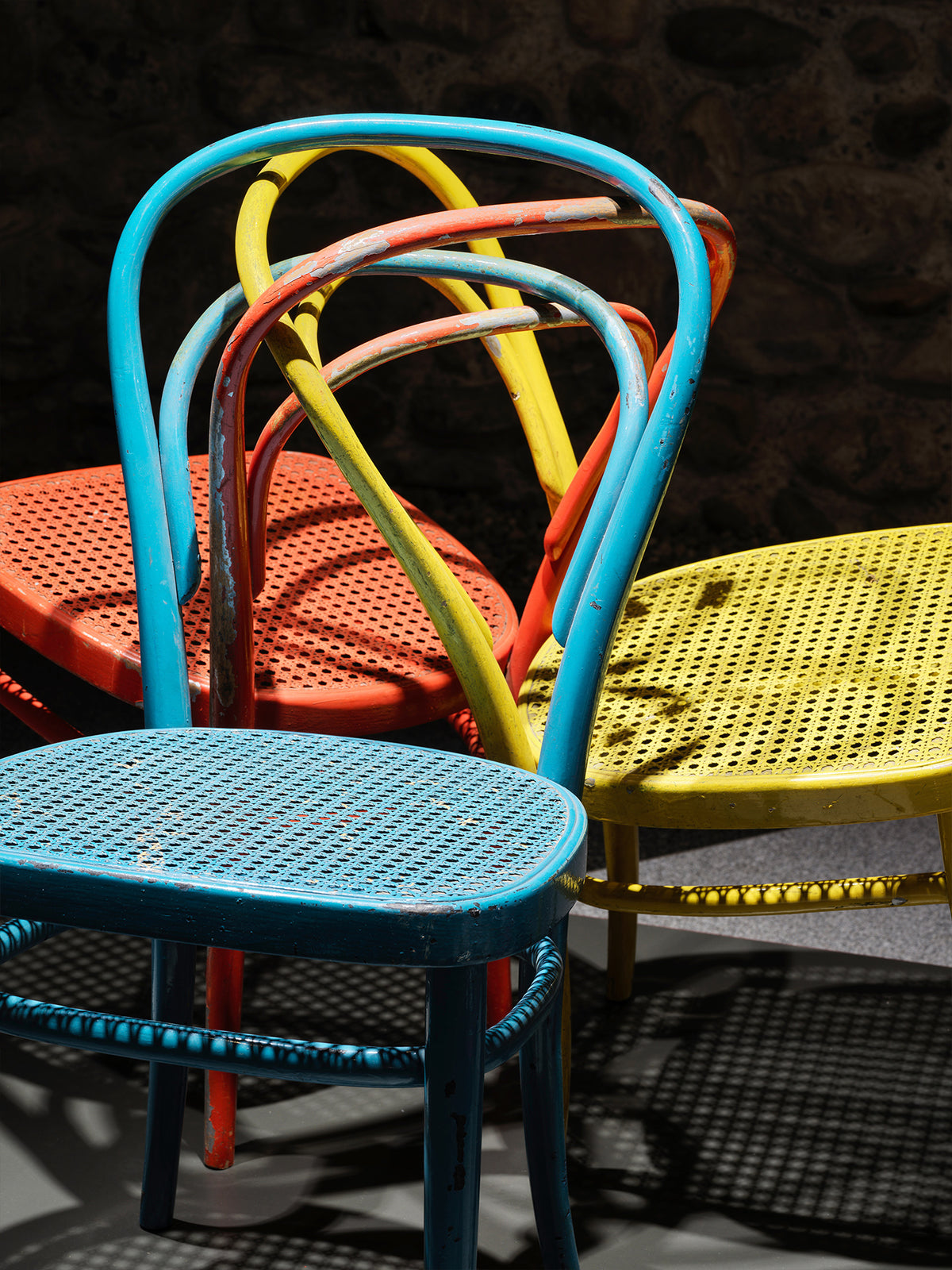
«Siamesischer Drilling» in der Ausstellung «Vom Stuhl zum Raum» im Widder Hotel

Zurich Design Weeks 2026

From the Chair to the Room

A chair that is no longer a chair. A rug that creates the illusion of steps. A floor that becomes a drawing itself. During Zurich Design Weeks 2026, works spanning several decades of Swiss design came together in one room at the Widder Hotel for a few days.
In the fireplace room of the Widder Hotel, Ruckstuhl and teo jakob presented “From Chair to Space.” Based on a concept by Christian Herren, the focused presentation revolved round the design work of Trix and Robert Haussmann.

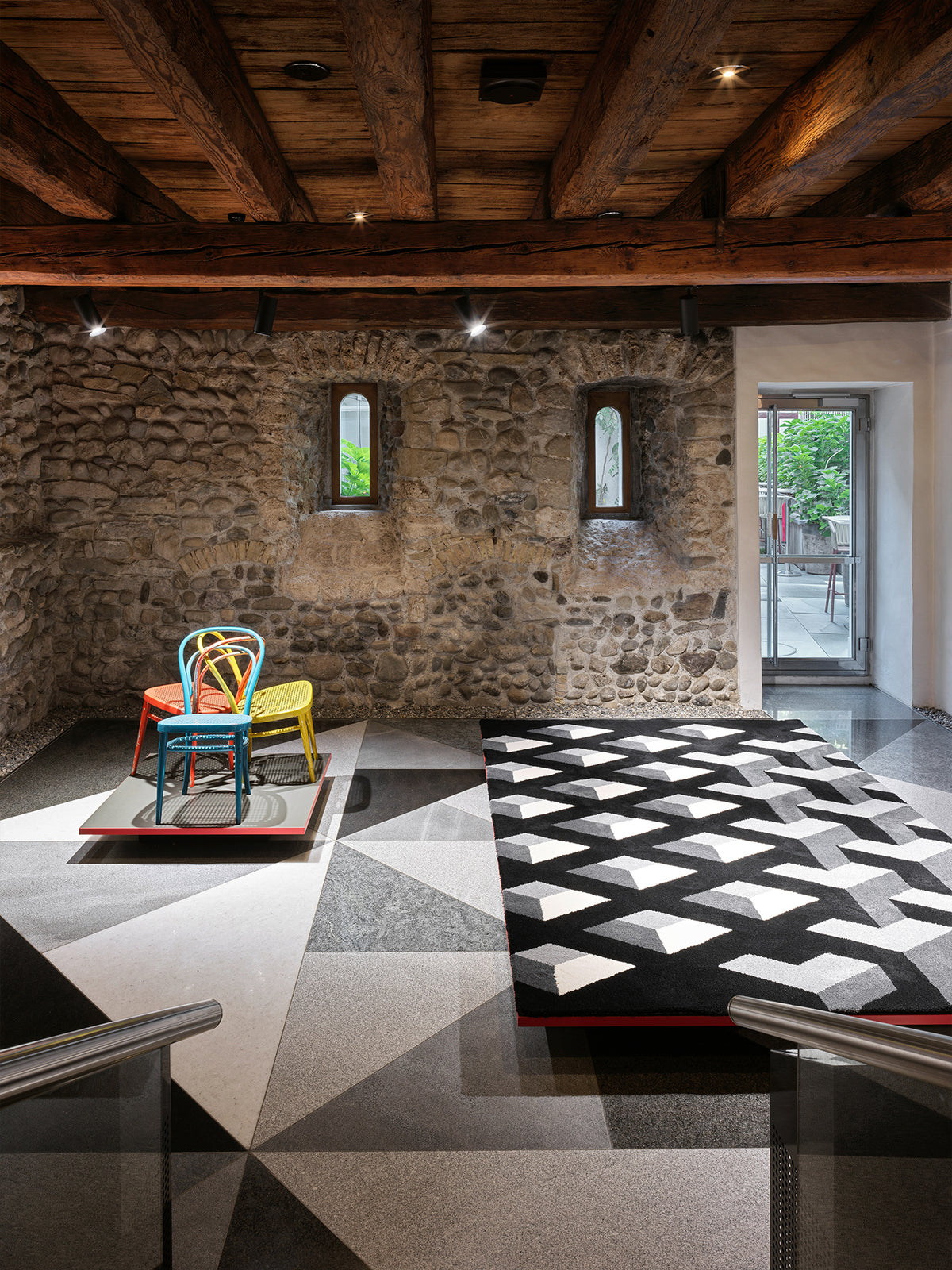
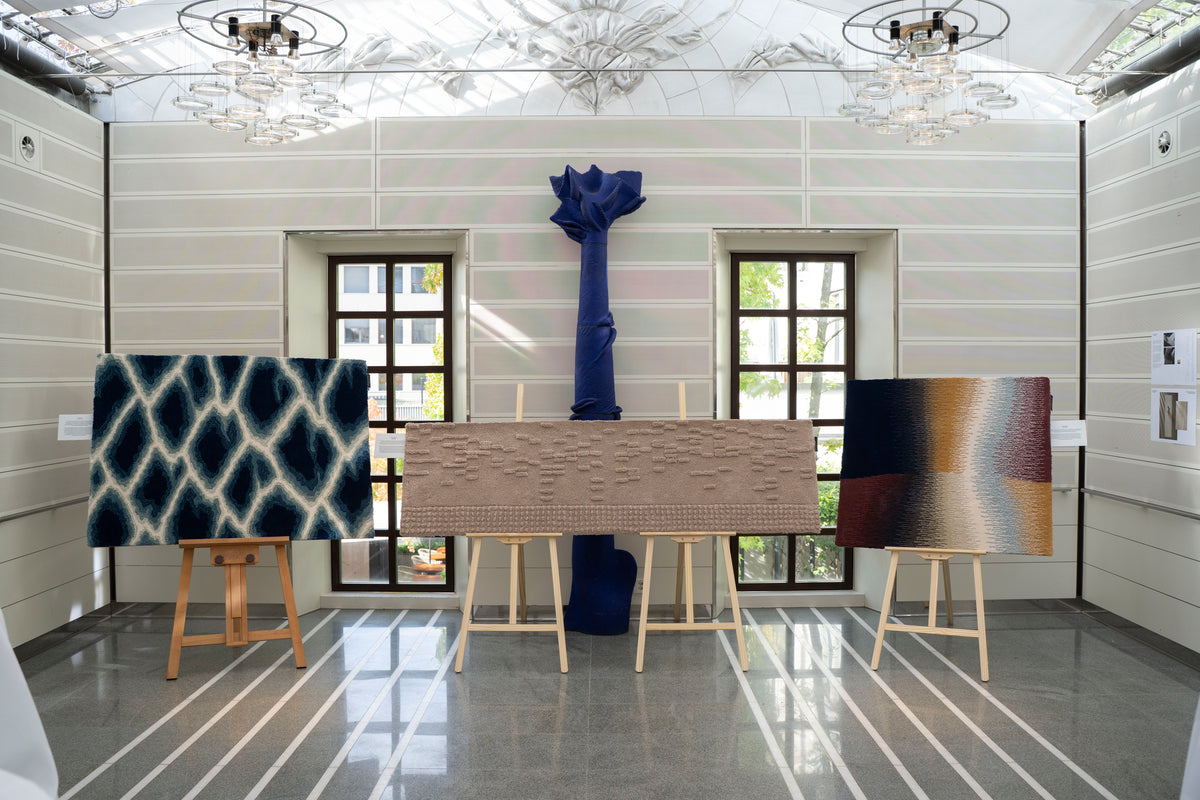
At its center were three pieces from different phases of their work: the “Siamese Triplet” from 1967, the RH-304 armchairs by Robert Haussmann, and “Atlantis Steps,” a rug design for the Zurich Hotel Atlantis from 1986, which Ruckstuhl has reissued together with EDITION-H.

The pieces did not stand isolated in the room. They engaged with Tilla Theus’s architecture, the fireplace room’s stone inlay floor, and the history of the Widder Hotel itself. For a few days, furniture, rug, art, and architecture came together in a multilayered dialogue.
«Siamesischer Drilling» von Trix und Robert Haussmann aus dem Jahr 1967
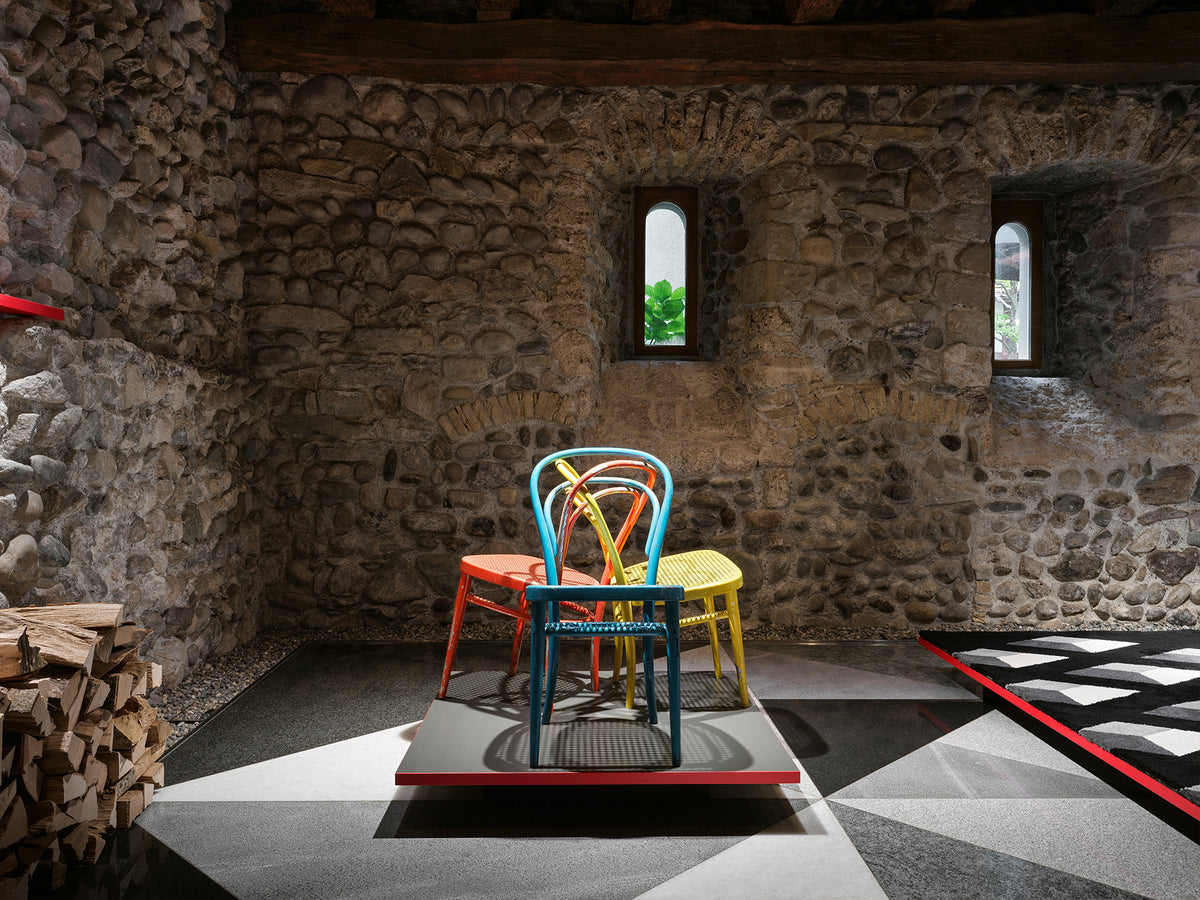
The “Siamese Triplet” by Trix and Robert Haussmann, 1967. On loan from the Teo Jakob Art Collection Foundation Teo Jakob.

A chair that is no longer one

In 1967, Trix and Robert Haussmann intertwined three classic Thonet chairs to form “The Siamese Triplet”. “Chair Fun” and became a pop-inspired furniture parody – an ironic counterpoint to the functionalist “Good shape”.

A utilitarian object became a sculpture that deliberately refused its actual function.

Theodor “Teo” Jakob acquired “The Siamese Triplet” for his collection after the event. Today, the object is held by the Stiftung Kunstsammlung Teo Jakob.

This early work makes visible what would repeatedly characterize the Haussmanns’ collaboration: playing with convention, perception, and expectation.

An illusion of wool

Almost twenty years later, Trix and Robert Haussmann were working on a different scale.

In 1986, they redesigned the reception area of Zurich’s Hotel Atlantis, where reality and illusion merged. One of these designs is “Atlantis Steps”.

Light and dark gradations create the impression of steps and spatial depth, even though the surface remains completely flat. Forty years later, Ruckstuhl and EDITION-H have reissued the design.

The optical concept remains unchanged. The material has been brought into the present.

Today, the carpet’s wear layer consists of 60 percent recycled wool. The yarn developed by Otex is made from wool textiles that are no longer worn and processed into a new, high-quality yarn.

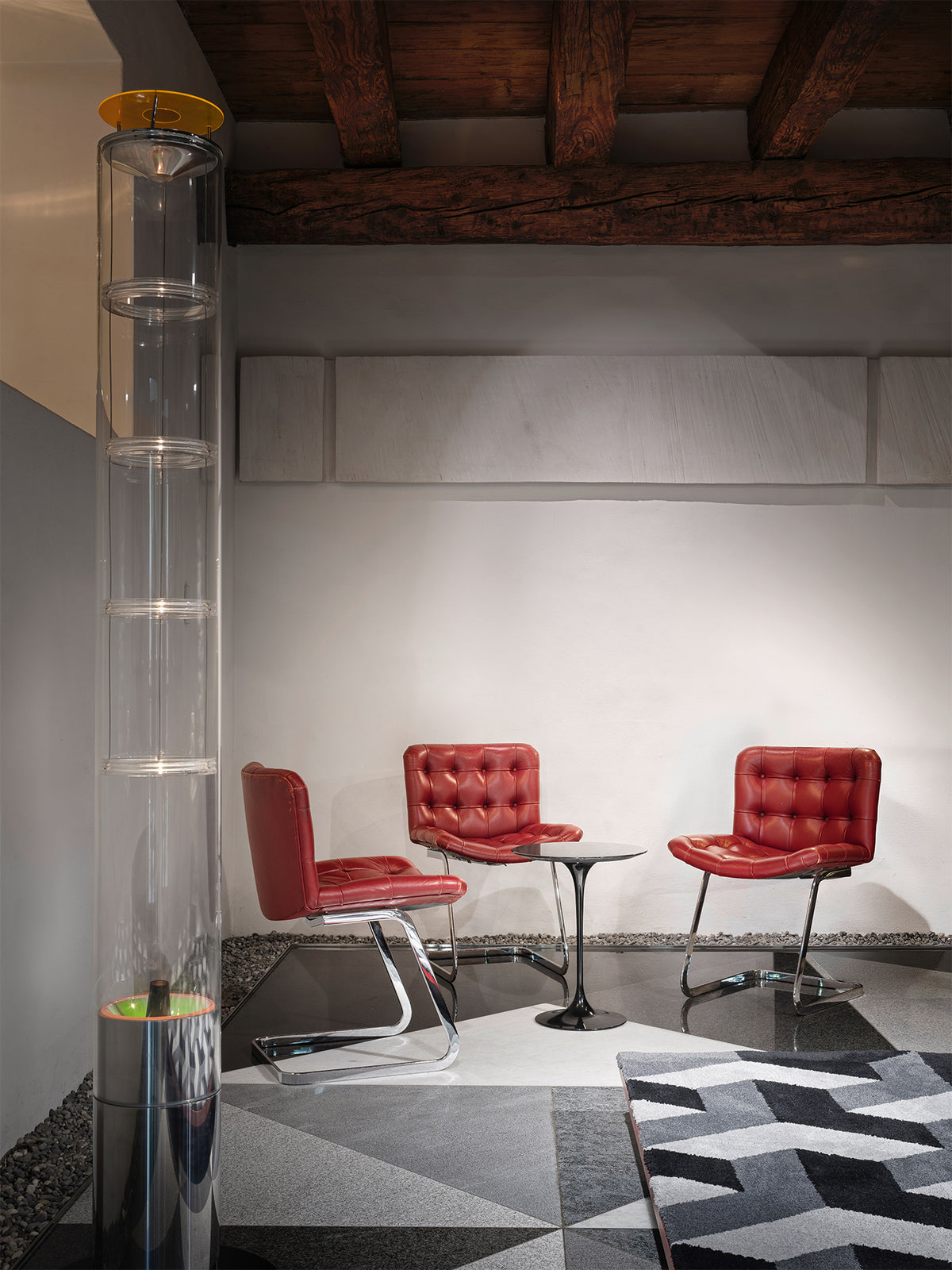
In the fireplace room, “Atlantis Steps” had a special counterpart. The stone inlay floor was developed by Tilla Theus following the lines of a drawing for her father. During the exhibition, two floor patterns thus overlapped: the Haussmanns’ optical illusion and Tilla Theus’s stone drawing.

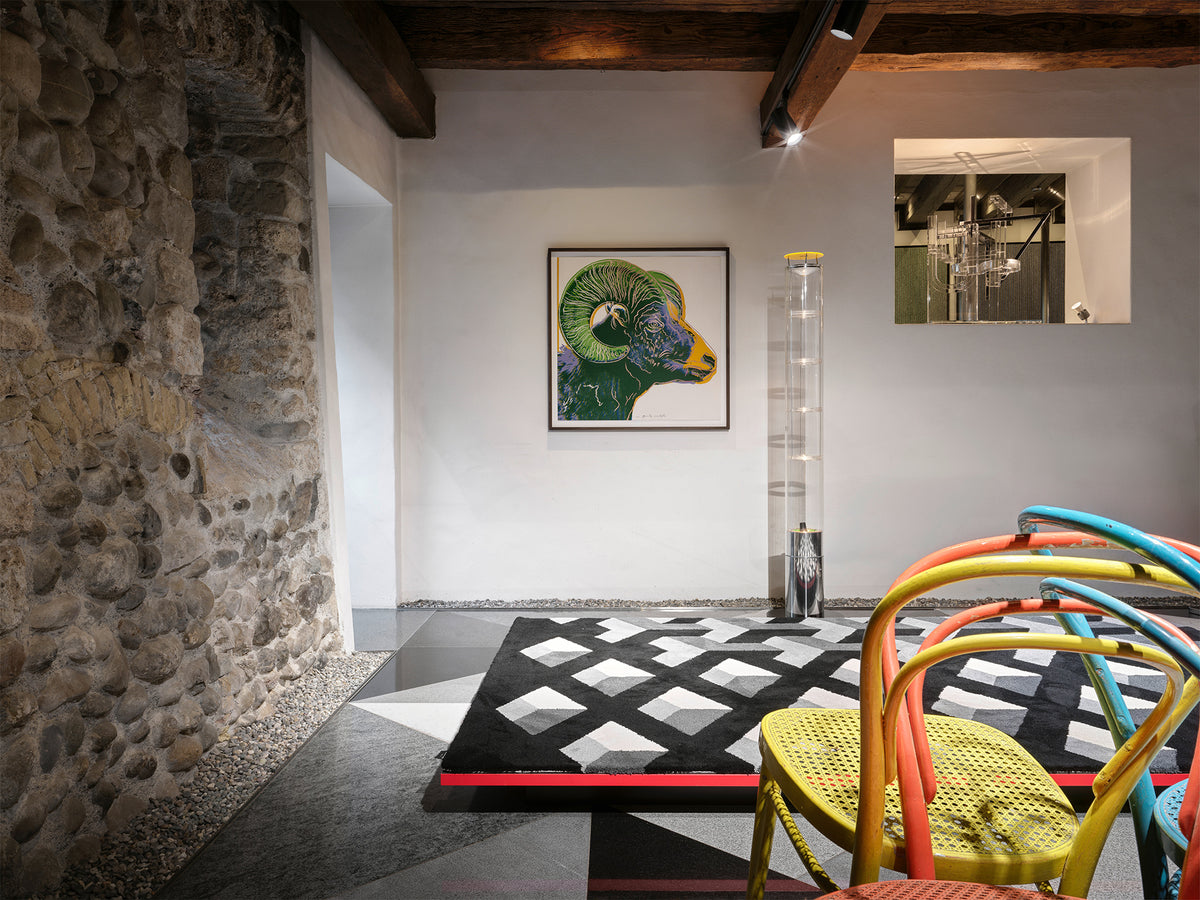
Between them stood three red RH-304 armchairs. Robert Haussmann designed the model in 1957/58 for UNESCO’s “Salle Suisse” in Paris. Tilla Theus later chose a special red version for the Widder Hotel. The examples on display come from the hotel’s original inventory.

Siamesischer Drilling» von Trix und Robert Haussmann aus dem Jahr 1967 und Teppich «Atlantis Steps» von Trix und Robert Haussmann in der Ausstellung «vom Stiuhl zum Raum» von teo jakob und Ruckstuhl während Zurich Design Weeks 2026 im Widder Hotel Zürich

A house as part of the exhibition

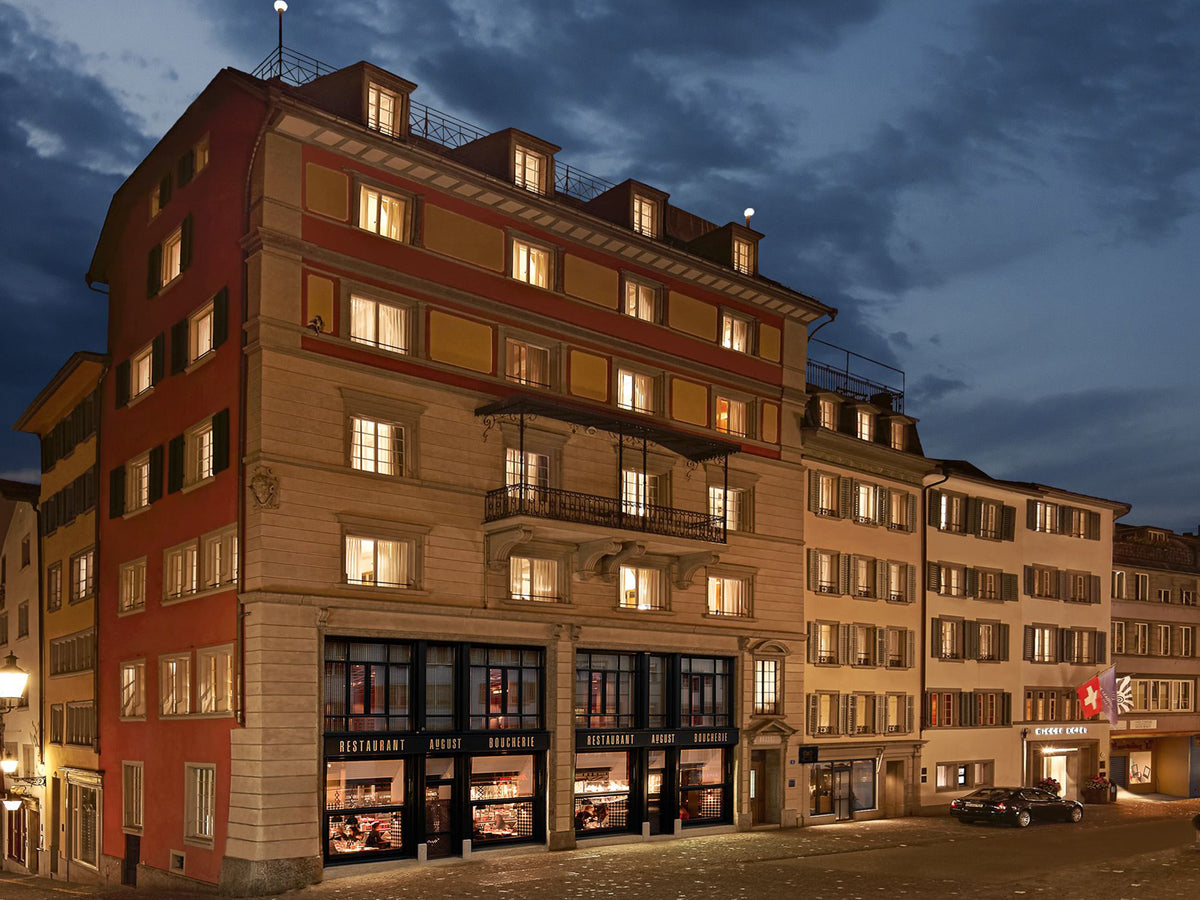
That “From Chair to Space” was shown at the Widder Hotel was about more than the choice of exhibition venue.

When renovating the building, Tilla Theus combined nine historic townhouses into a layered ensemble in which old structures, new materials, art and design consciously stand side by side. This approach was also palpable in the fireplace room.

The stone floor, the historic RH-304 armchairs and the hotel’s art collection did not form a neutral backdrop; they became part of the presentation themselves. This also included a work by Andy Warhol, which exemplifies the close connection between art, architecture and interiors at the Widder.

This created a setting in which different eras and disciplines overlapped: Haussmann met Theus, furniture met rug, design met art.

That was precisely the strength of this small exhibition.

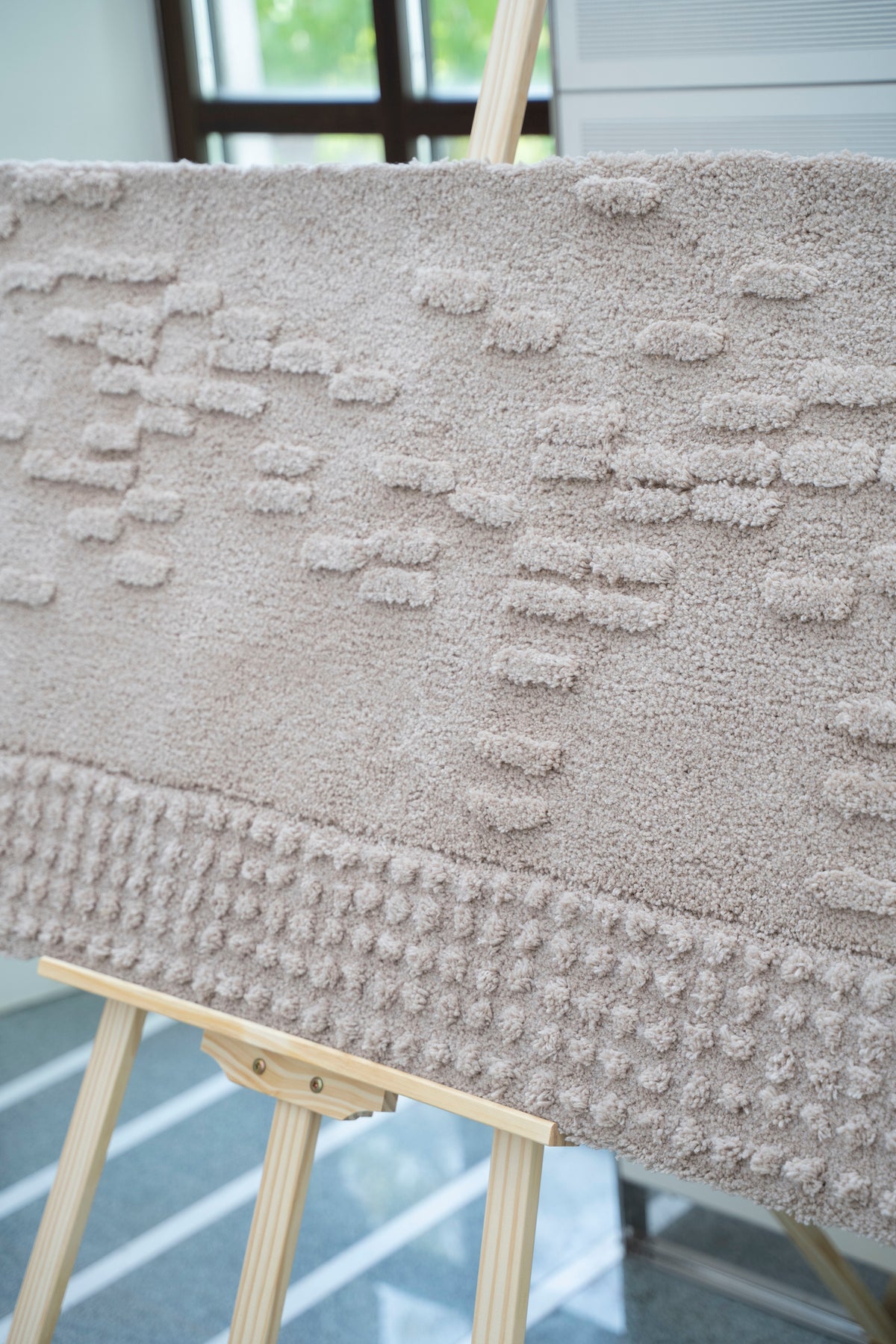
Just a few steps away, the Carpet Design Competition 2026 turned the spotlight on the rug of today. The lobby of the Widder Hotel displayed 16 selected designs from more than 70 submissions.

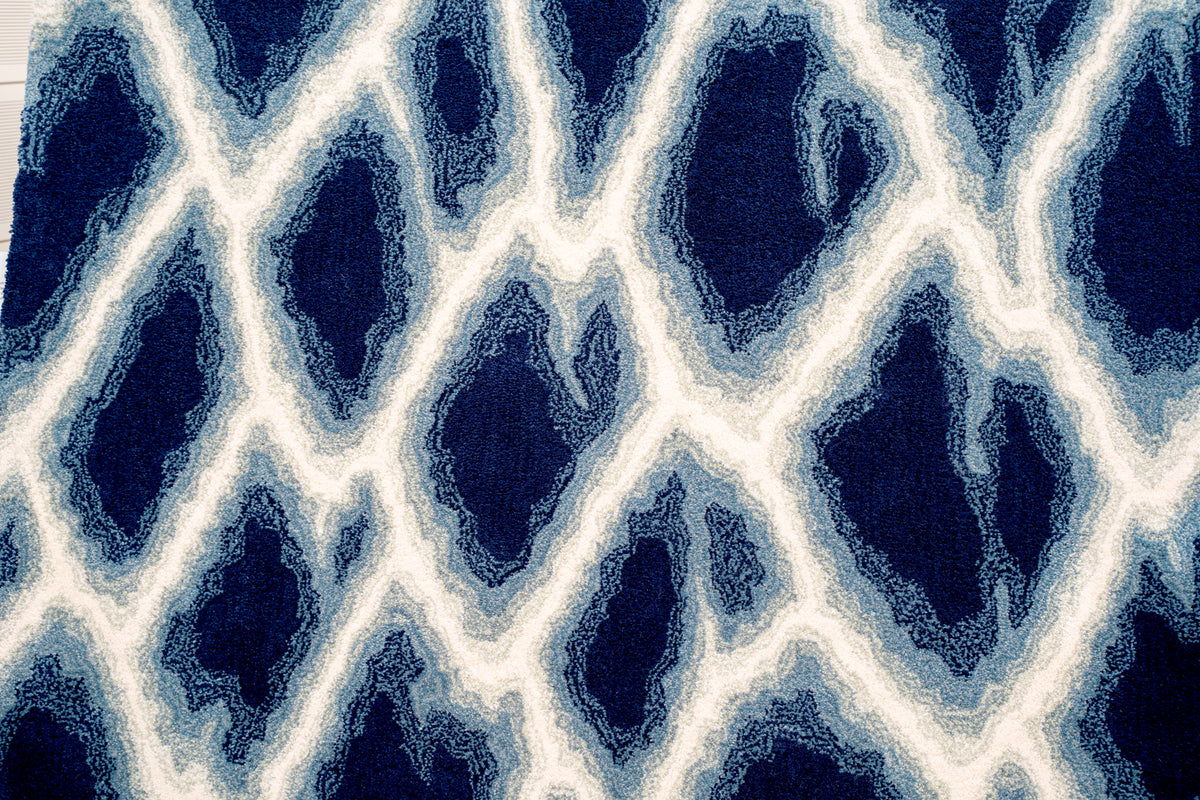
The competition, initiated by STF Swiss Textile College and Ruckstuhl , used high-quality wool yarns from leftover stock and small production runs. Three award-winning designs were made into one-of-a-kind rugs on the tufting robot at Ruckstuhl in Langenthal.

This brought two generations of creative work together at the Widder: a historic design work being reinterpreted and developed further, and young designers creating new forms from existing material.

We owe many people for making these encounters possible for a few days.

Our special thanks go to Christian Herren for the exhibition concept and curatorial guidance for “From Chair to Space,” the Kunstsammlung Foundation Teo Jakob for lending the “Siamese Triplets,” and Tilla Theus for lending the historic RH-304 armchairs.

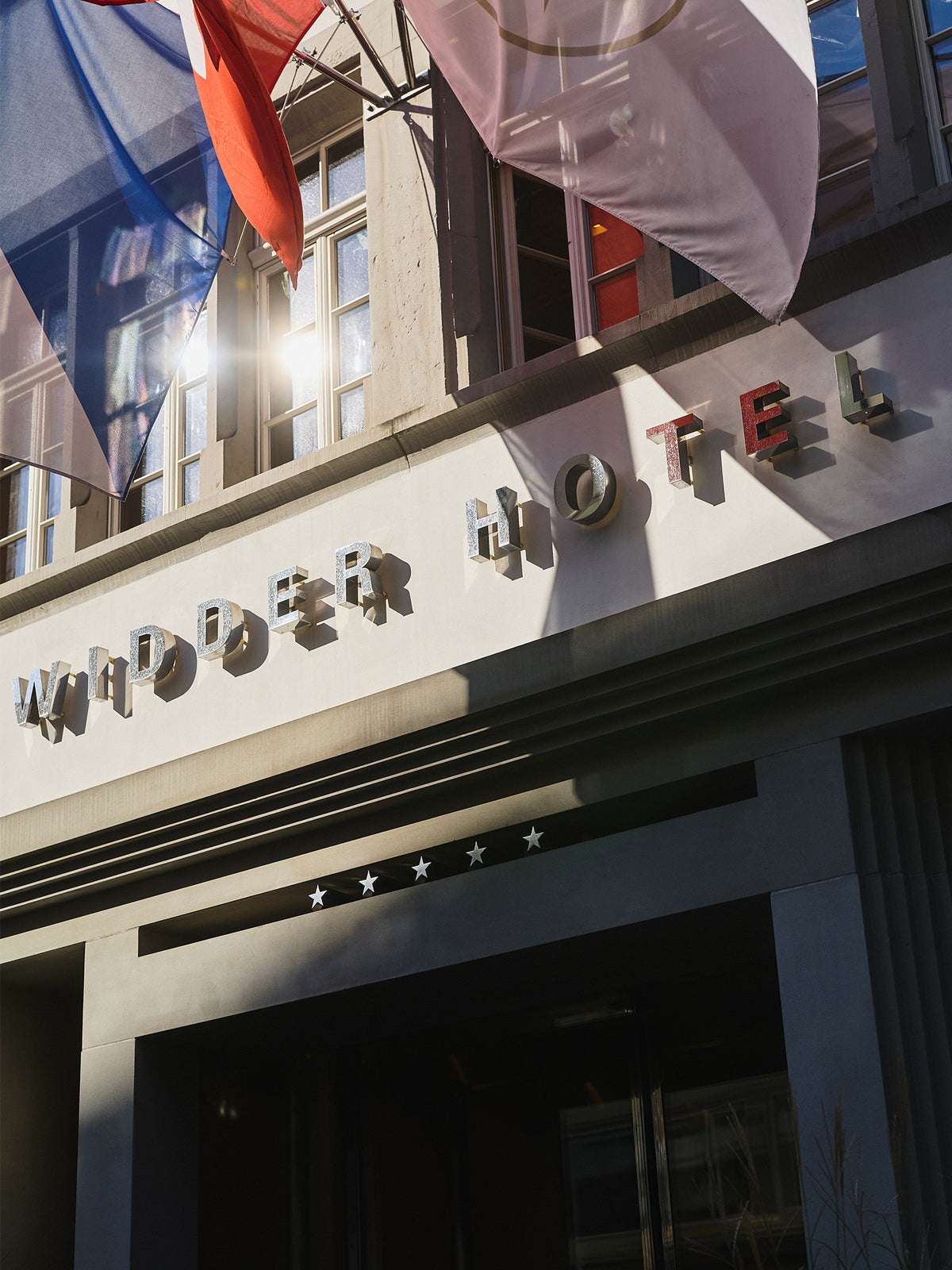
We thank the Widder Hotel for its generous hospitality and for providing a setting that was far more than a backdrop. The architecture, history, and art of the hotel itself became part of the exhibition.

We also thank teo jakob, the STF Swiss Textile College, the Zurich Design Weeks and everyone involved who contributed to these days with their knowledge, craftsmanship, organization, and personal commitment.

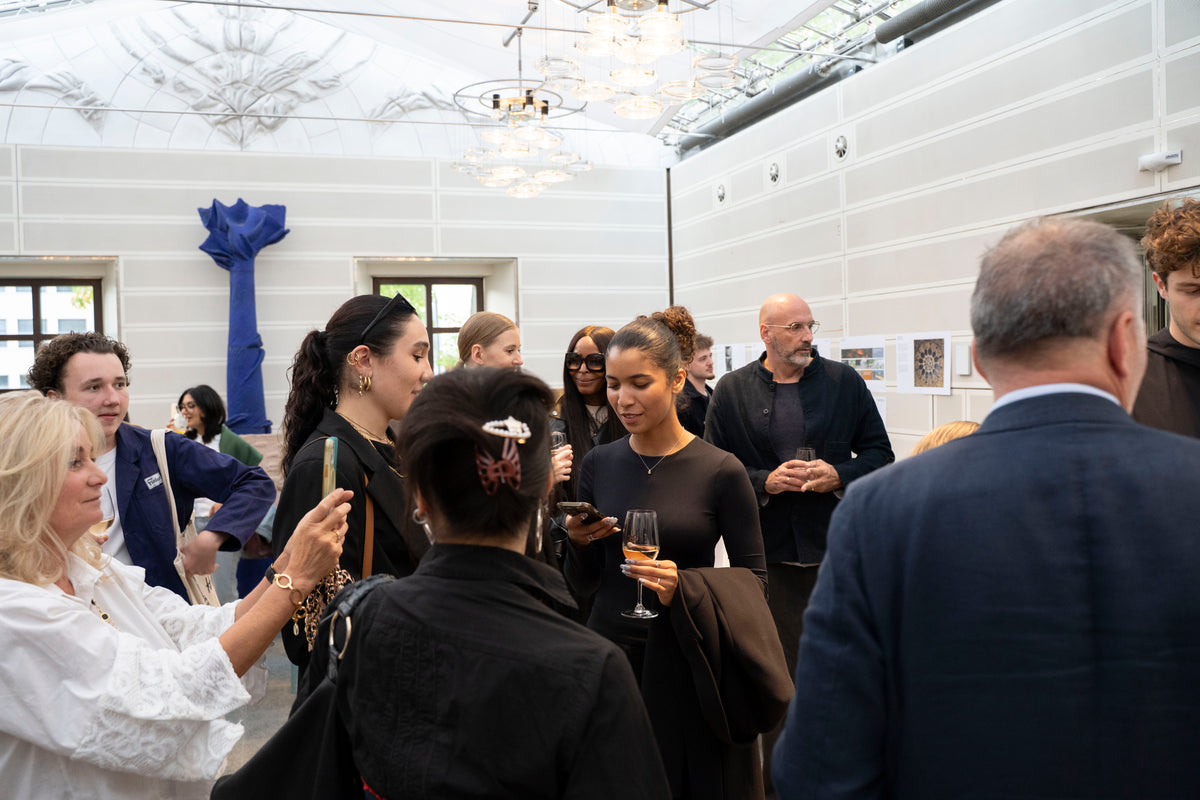
And, of course, all the visitors who discovered the two exhibitions.

The story does not end with the Zurich Design Weeks.

On November 14, 2026 , “Haussmann Studiolo” opens at the Bündner Kunstmuseum Chur. “Haussmann Studiolo”. The exhibition continues to explore the shared design work of Trix and Robert Haussmann—with furniture, designs, and spatial works, as well as works from the Kunstsammlung Foundation Teo Jakob and carpets from the new TRIX & ROBERT HAUSSMANN COLLECTION by Ruckstuhl.

For Trix Haussmann, the exhibition is also a return to Chur, where she was born in 1933 and grew up.

Haussmann Studiolo
Bündner Kunstmuseum Chur
November 14, 2026 – March 14, 2027

Exhibition photos: Pierre Kellenberger
Widder Hotel photos: courtesy of the hotel
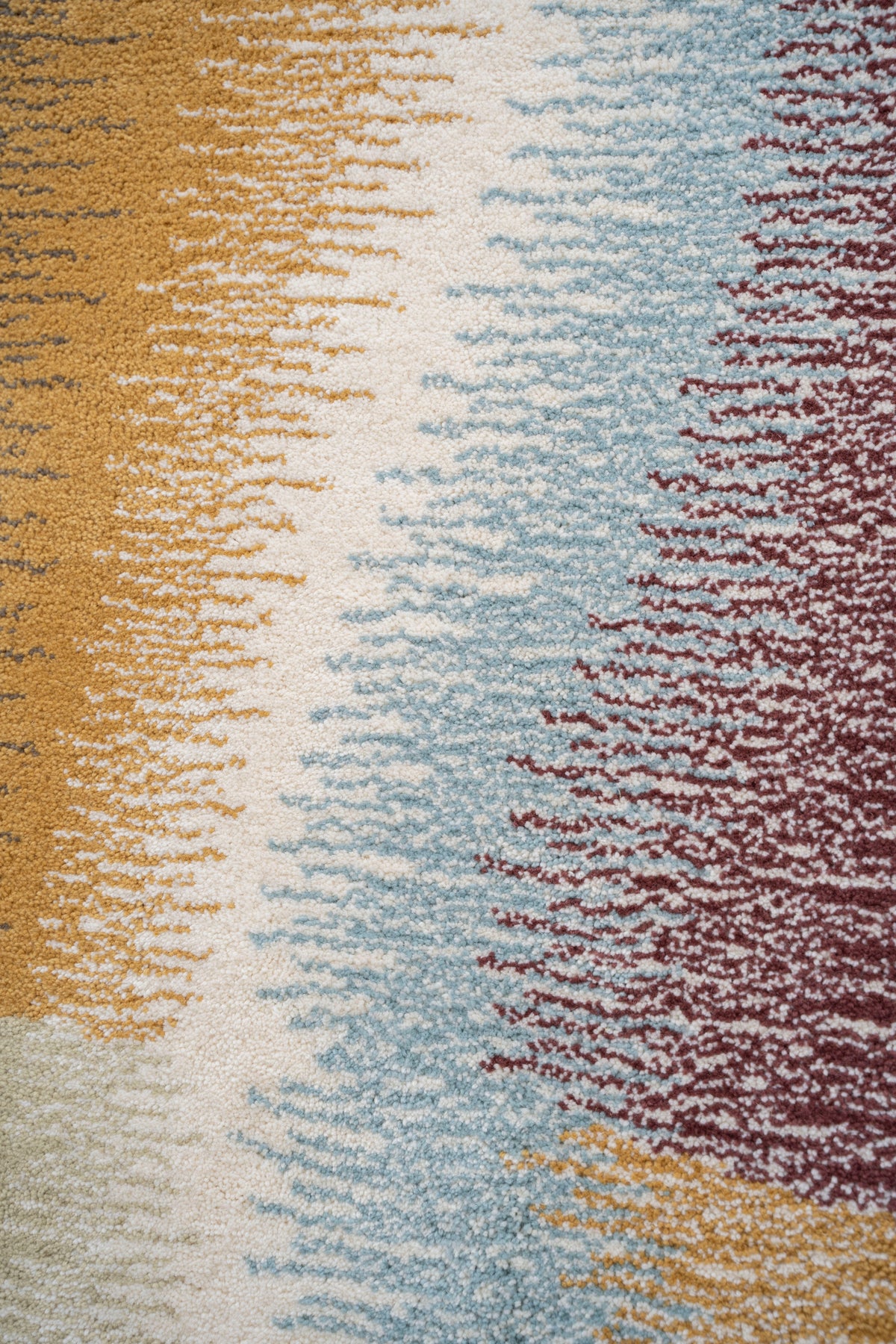
STF Carpet Competition photos: courtesy of the hotel