
Inspiration
Atmospheres, harmonies, and colors


What does that mean specifically?
Harmony as a Special Case of the Atmosphere




Inspiration
Atmospheres are neither something objective, i.e., properties that a thing or object possesses, nor do atmospheres describe the emotional state of the observer. Rather: "That through which environmental qualities and human well-being are related to each other, those are the atmospheres." Therefore, an atmosphere necessarily requires two parts: the thing and the observer: "Atmosphere is the shared reality of the perceived and the perceiver." This does not make things any easier, as designers now know: the design of the product, the space, the "perceived" makes up at best half of the atmosphere.
From this perspective, harmony can be attributed to the aesthetic aspects of the atmosphere: From the Greek harmonia, (joining together), harmony—in colloquial terms—means bringing together incompatible elements into a fitting whole: If the vibrations are in a balanced relationship with each other, harmony theory says we perceive the whole as coherent. Secondly, this whole includes the entire spectrum of vibrations: audible, visible, tangible, and also smells.
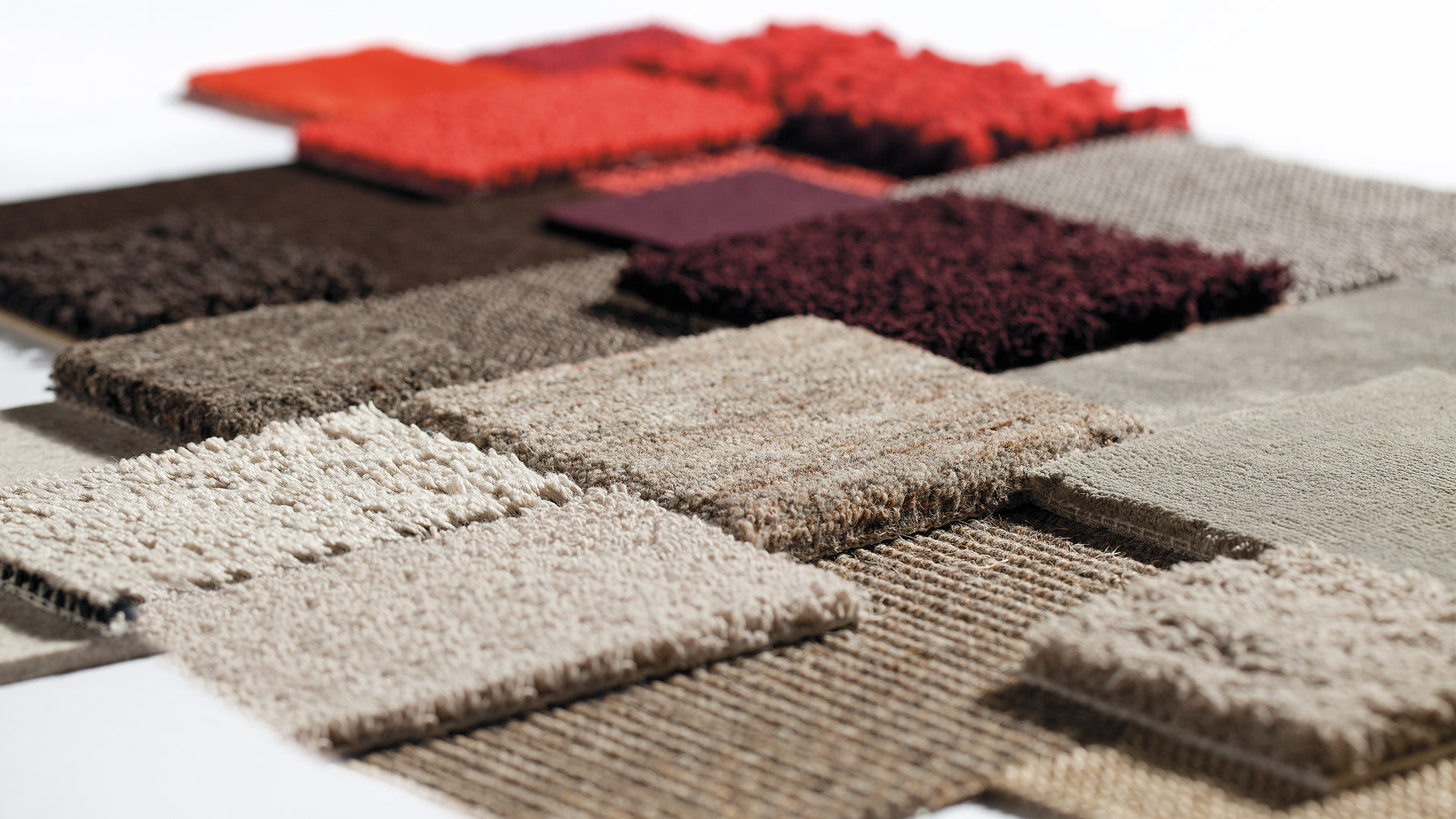
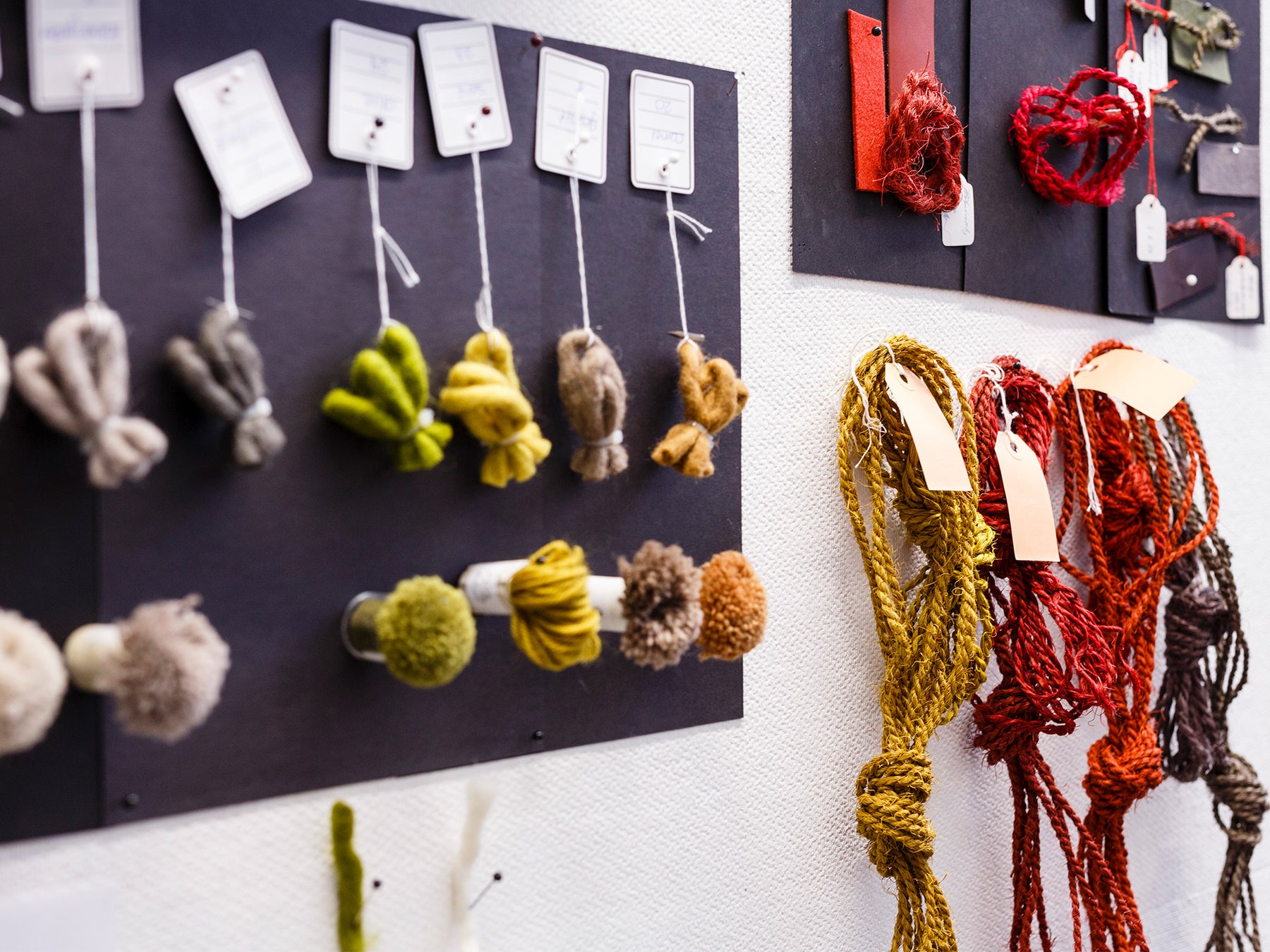
This means: All our senses want to be addressed simultaneously. The more diverse, the more satisfying. This already happens in our designed outdoor spaces without much human intervention. The catch-up demand postulated in the context of the Health and Care movements lies in the sensory-focused design of our indoor spaces. Carpets, carpet-like, and textile structures prove to be grateful helpers for this purpose: Through the almost unlimited combination possibilities of material and color, surface and construction, any conceivable effect can be achieved: on ceilings and walls, on floors, and freely in the room.
The carpet manufacturer Ruckstuhl masterfully plays the keyboard of textile spatial effects. When the carpet is right, the room is in tune. Suitable carpets or structural textile solutions can set spaces vibrating. This allows atmosphere to arise and harmony – through part two, the more important one: the present and perceiving human being.
This perspective, written by Margarete von Lupin, appeared in 2016 in the publication "Health and Care" by Ruckstuhl. The publication was reissued in 2026.
1 Atmosphere. Gernot Böhme. Edition Suhrkamp, Volume 927. 1995 Suhrkamp Frankfurt a. M.
2 Architecture and Atmosphere. Gernot Böhme. 2006, Wilhelm Fink Verlag, Munich